 John Mann
In the case of State v John Mann, Mann did commit assault and battery in addition to attempted murder. By definition, socioeconomic is the social standing or class of an individual or group. It is often measured as a combination of education, income, and occupation. Although a slave was the property of a more wealthy human, they are still seen as a human being that lives and breathes. John Mann has no heart for humanity as he shot a fellow human with no remorse.
🙎♂️ 😒
Thankfully, Lydia was wounded and not DOA, it would be inhumane. Mann only cared about his social status as if word found out he lost a slave he would be looked down upon. It would hurt the power relationship and would bring Mann down to the slaves' level. Mann had the mindset that he was above Lydia because he is her owner when in fact he was merely renting her for the year. But looking at the case from afar, does shooting someone because they wanted to be free really worth it?
🤔
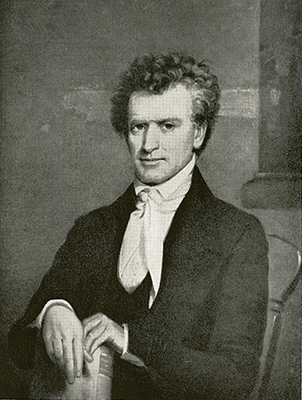 Thomas Ruffin 👨⚖️
The supreme court justice, Thomas Ruffin(ABOVE), was presiding the case and first ruled that Mann was guilty then “Nevertheless, rather than using his celebrated legal acumen to recognize that coming truth, Judge Thomas Ruffin instead clung fast in State v. Mann to the legal fiction of slaves as insensible property”. According to an essay “Judge Ruffin claims he was "compelled" to reach in Mann”. In the same essay written by James A. Wynn Jr., his claim was whether the final verdict was a judicial choice or judicial duty. It seems not only was Mann worried about his social status but also Judge Ruffin💁


In the case, State v Hale, says a battery committed on a slave, no justification, or circumstances attending it, being shown, is an indictable offense From the standpoint of ethics, law, history, and tradition the ruling was improper in this case. To allow someone to shoot at and injure another person, without punishment is insanity.
When the case was first brought to court, the jury, came to the verdict that Mann was guilty and had to pay the fine. “Authorities deemed Mann’s response to slave’s attempt at running to “disproportionate”, “cruel and unwarrantable” and charged Man with battery and assault. The jury found him guilty in a criminal trial. Mann appealed with the argument that the slave-holder, as well as the slave-owner, were entitled to treat slaves like property since Mann was only renting Lydia at the time”.Upset with the outcome, Mann appealed the case and it made its way to the Supreme Court.
But how come when the case was appealed, the verdict changes? What would be his reasoning? Was he worried about how the people perceived him, or did he look over the facts and use that to change his verdict?
Looking at the case, it is the issue in which it would be abuse, and Mann would be fined for the attempted murder of Lydia. In an attempt to avoid vicious, physical punishment, she was shot at by Mann. By allowing Mann to have a refund of his $10 fine basically disregards Lydia as a human being and just objectifies her to a lower ranking, property. 😢
Bibliography
https://www.ncpedia.org/biography/ruffin-thomas


No comments:
Post a Comment